


An ectopic pregnancy occurs when a pregnancy is located in a place other than the uterus. Ectopic pregnancies are very dangerous when left untreated.
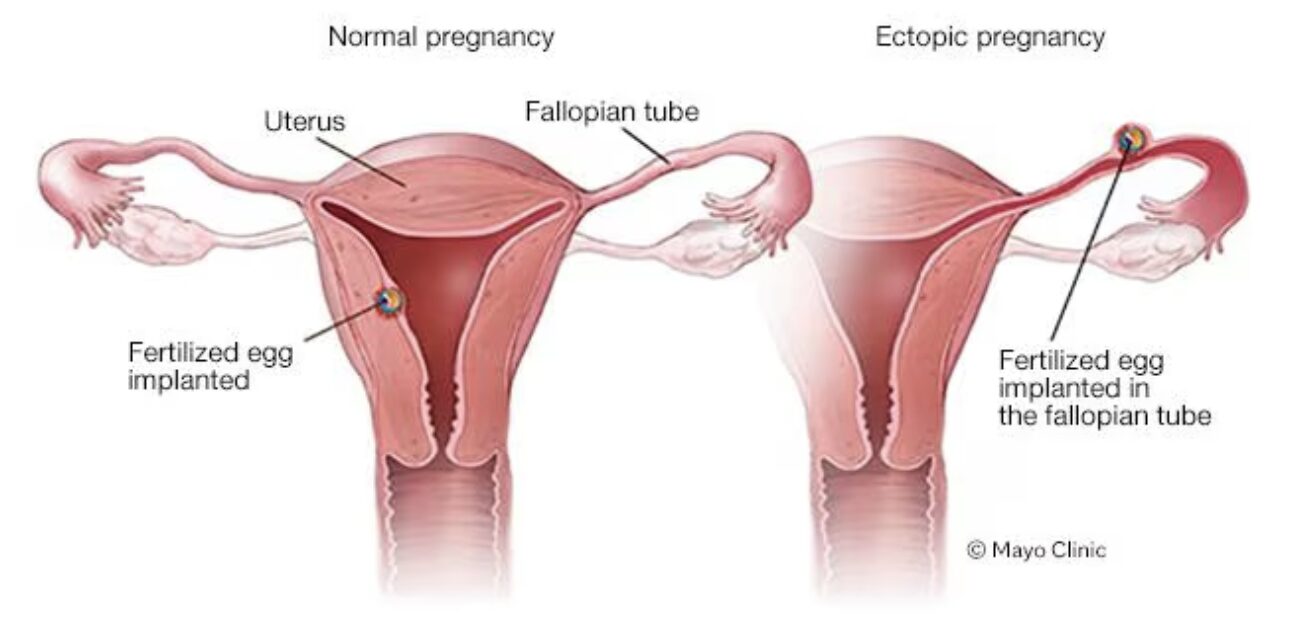
Image Source: Mayo Clinic
Anywhere from 0.25% to 1% of all pregnancies are ectopic, but the risk is significantly higher for those who are on the pill or have had STDs, which can damage the uterine tubes. Those who have undergone tubal ligation, have a hormonal IUD, have had an abortion, or have participated in IVF also have several times higher risk of ectopic pregnancy.
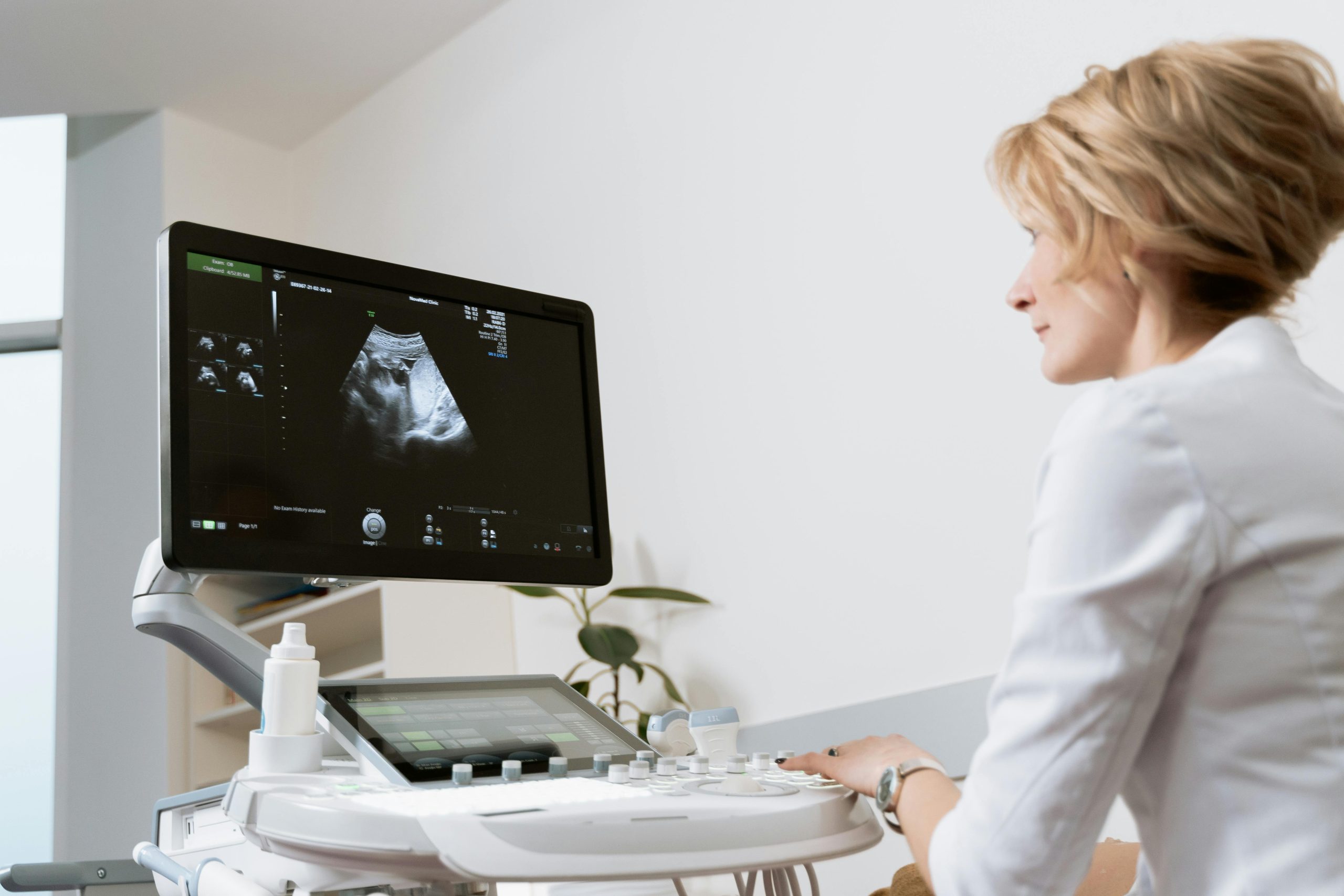
Ectopic pregnancies can be detected as early as 3 weeks after fertilization through a transvaginal ultrasound. Women’s Care Mary’s Center offers free limited ultrasounds – book an appointment now. Ultrasounds are essential at the beginning of a pregnancy in every case in order to ensure there are no complications. Even if you are unsure about your pregnancy decision, make sure that you get an ultrasound early on in your pregnancy.
Pregnant? Not sure what to do next?
Scroll down to book an appointment with us online. We’ll answer your pregnancy related questions with clarity and kindness.
Medical Sources
1S Gordts et al. Clinical factors determining pregnancy outcome after microsurgical tubal reanastomosis. Fertility and Sterility. 2009; 92(4): 1198-202/ – https://pubmed.ncbi.nlm.nih.gov/18930195/
2S Jayaraman and M Mann. Male and female sterilization. Obstetrics, Gynaecology & Reproductive Medicine. 2002; 22(4); 85-91. – https://pubmed.ncbi.nlm.nih.gov/8072940/
3AA Milki and SH Jun. Ectopic pregnancy rates with day 3 versus day 5 embryo transfer: a retrospective analysis. BMC Pregnancy Childbirth. 2003; 3:7. – https://pubmed.ncbi.nlm.nih.gov/14604439/
4SK Van Den Eeden et. al. Ectopic pregnancy rate and treatment utilization in a large manage care organization. Obstetrics and gynecology. 2005 May;105(5 Pt 1):1052-7. – https://pubmed.ncbi.nlm.nih.gov/15863544/
5A Weiss, R Beck-Fruchter, J Golan, M Lavee, Y Geslevich, and E Shalev. Ectopic pregnancy risk factors for ART patients undergoing the GnRH antagonist protocol: a retrospective study. Reproductive Biology and Endocrinology. 2106: 14(2). – https://pubmed.ncbi.nlm.nih.gov/27005813/